
Keep an Eye on the Condition of Motors and Equipment
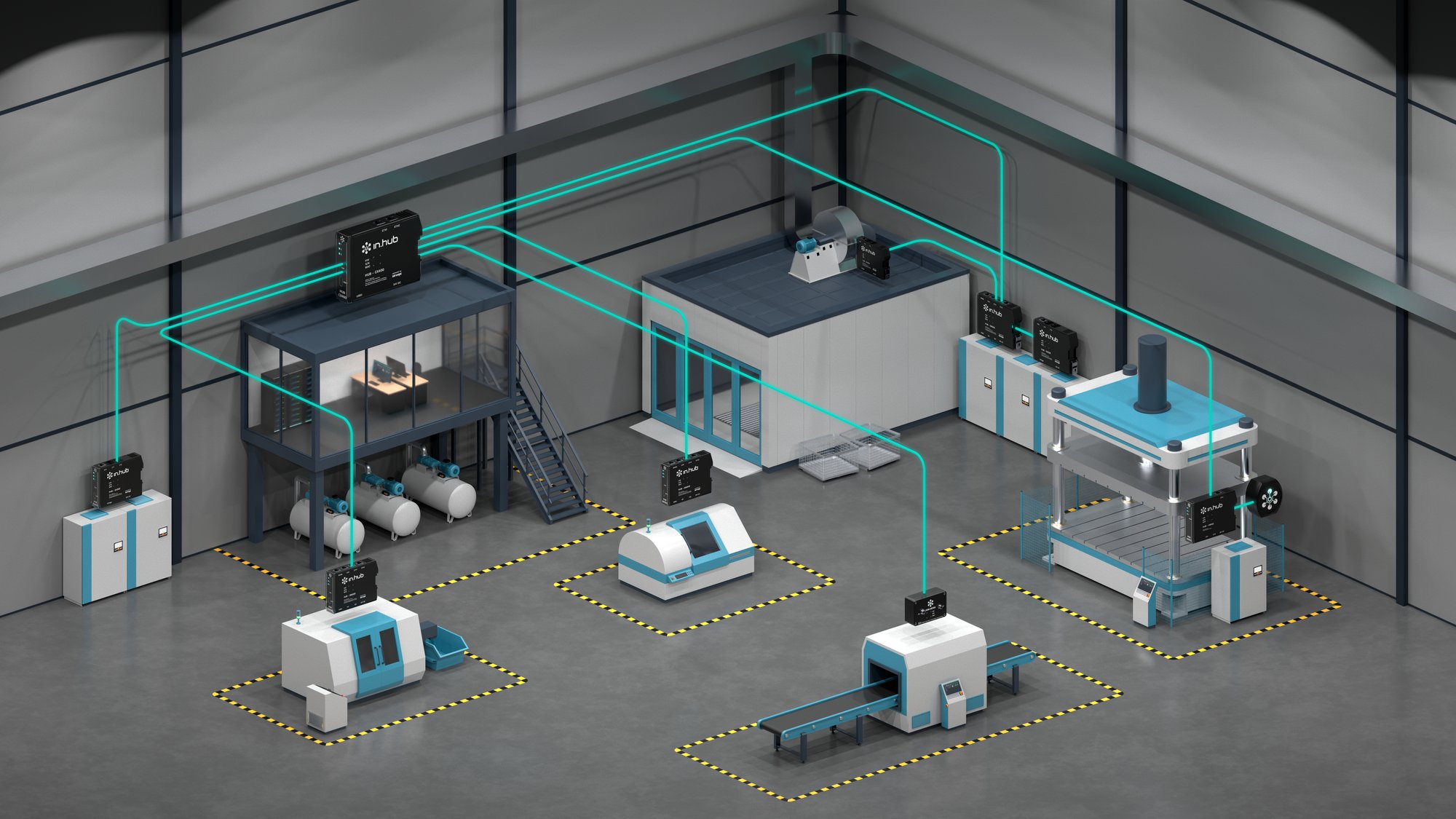
in.hub provides devices, the siineos® platform, and apps for collecting machine data directly on-site. This page shows how you can use vibration measurement to detect bearing damage early on.
Benefits
What You’ll Achieve
- Detect wear on bearings, drives, and pumps early
- Receive automatic alerts via email or SIGNL4
- Compare frequency spectra over time
Target Audience
Which machines and facilities it is suitable for
Bearings, drives, fans, and pumps in regular operation where wear is evident in the vibration pattern.
Process
How It Works
-
01
Installing Sensors
Install IEPE sensors as close as possible to the measurement location.
-
02
Connect the HUB-VM102
Connect the module to the sensors and configure it.
-
03
Send data to the target system via MQTT.
The HUB-VM102 sends all data directly to the target system via MQTT. -
04
Connect to a gateway.
If you want to take full advantage of its capabilities, connect the HUB-VM102 to a gateway to use apps there. -
05
Evaluate
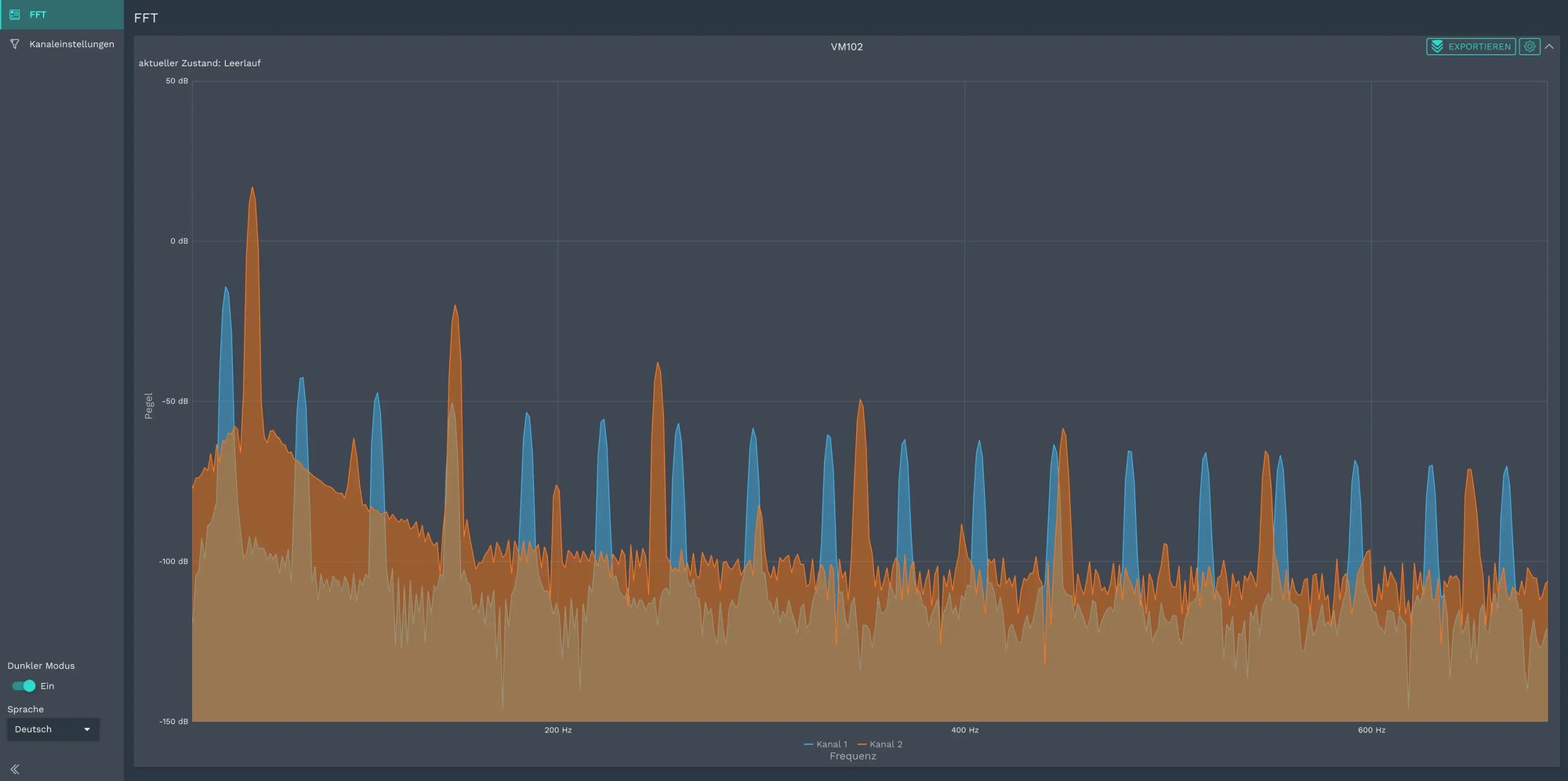
View frequency spectra in in.hub Waves, identify anomalies, and set up alerts.
Equipment
Here's what you'll need
Module
HUB-VM102
Vibration module with 2 IEPE inputs up to 48 kHz
App
in.hub Waves
Vibration Analysis, FFT Spectra, Wear Detection
Gateway
HUB-GM400
Unlock the full power of apps and the alarm module on one of the gatewaysUnlock the full power of apps and the alarm module on one of the gateways
Transparency
What's running locally, and what you need a connection for
| Task | Where it runs | Do you need the Internet? |
|---|---|---|
| Record, store, and analyze measurement data | on the device | No |
| View dashboards and real-time metrics | in the browser, on your own network (LAN/Wi-Fi) | No |
| Alerts When Threshold Values Are Reached | on the device; forwarding via email or SIGNL4 uses your network | For external forwarding only |
| Send data to your systems (OPC UA, MQTT, Modbus, SQL, REST) | on its own network | No |
Do It Yourself
What You Can Do Yourself
- Install sensors if you have access to the measurement location
- Adjust limit values yourself via threshold configuration
With support
How we or a partner can help
- Selecting the right measurement range for your system
- On-site consultation regarding sensor placement
Is this right for you?
Requirements and Limitations
Works well when
- the system operates regularly under comparable conditions
- IEPE- or ICP-compatible sensors can be installed
- You have a network connection via LAN or Wi-Fi on-site
It doesn't work well when
- If individual threshold values are to be determined immediately without any reference measurements, a learning phase is required first
- if the measurement location is in a potentially explosive atmosphere: No in.hub device bears an Ex marking. However, the sensors are available with Ex certification. These can be used in potentially explosive areas; only the device itself must be housed in a non-potentially explosive area.
Result
Here is the result
Frequency spectra for each sensor over time, with deviations from normal conditions highlighted in color.
FAQ
Frequently Asked Questions
Yes, completely. The data can then be sent directly via MQTT, for example.
All sensors with an IEPE or ICP interface are compatible with the HUB-VM102.
Yes, a trigger input enables event-based measurement, including detection of motor speed.
Threshold values can be determined using algorithms, external software integration, or threshold configuration; please contact us for advice.
Personal Introduction
Tell us about your use case.
During our first conversation, we’ll clarify your goals, existing data, and a sensible starting point. You’ll receive an honest assessment of whether and how in.hub fits your project.


Newsletter
The in.hub in.sights&tech.radar
Industry news and real-world insights from actual companies, every two to four weeks.