
Continuously Monitor Particle Levels in the Air
in.hub provides devices, the siineos® platform, and apps for collecting machine data directly on-site. This page shows you how to continuously monitor particle levels using pSYS.
Benefits
What You Can Achieve With It
- Record particle levels around the clock
- Monitor and display cleanroom classes
- Analyze data without using the cloud
Target Audience
Which Machines and Facilities It Is Suitable For
Production and cleanroom environments that want to continuously document their particle levels. Specifically in the area of technical cleanliness, but also in terms of compliance with occupational safety regulations.
Process
How It Works
-
01
Placing Sensors
Attach the 5 included particulate matter sensors and the temperature and humidity sensor to the measurement points.
-
02
Connect pSYS
Set up the device using a 230-V power supply and connect it to the local network.
-
03
Evaluate
View or export values from the device.
-
04
Alerting
Set thresholds and limits, and receive an active alert when they are exceeded
Equipment
Here's what you'll need
Overall System
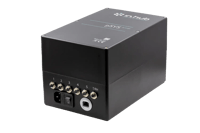
pSYS
Particle Measurement System, complete system with 5 fine dust sensors as well as a temperature and humidity sensor
Transparency
What's running locally, and what you need a connection for
| Task | Where it runs | Do you need the Internet? |
|---|---|---|
| Record, store, and analyze measurement data | on the device | No |
| View dashboards and real-time metrics | in the browser, on your own network (LAN/Wi-Fi) | No |
| Alerts When Threshold Values Are Reached | on the device; forwarding via email or SIGNL4 uses your network | For external forwarding only |
| Send data to your systems (OPC UA, MQTT, Modbus, SQL, REST) | on its own network | No |
Do It Yourself
What You Can Do Yourself
- Export values yourself as a CSV or Excel file
- Install sensors directly into the machine as needed
With support
How we or a partner can help
- Integration with your MES system
- Consulting for more than 5 sensors or multiple devices
Is this right for you?
Requirements and Limitations
Works well when
- you want to continuously monitor particulate matter up to 10 micrometers (PM1.0 to PM10)
- You want to track particulate matter movements using multiple sensors in the room
- You want to perform live measurements 24/7 and 365 days a year
It doesn't work well when
- if use in a potentially explosive atmosphere (gas or dust) is planned: No in.hub device bears an Ex marking, not even pSYS
- Particles larger than 10 micrometers are to be recorded separately: pSYS displays them as a maximum of 10 micrometers. Larger values are still recorded as 10 µm and are not lost.
- You want to perform a targeted, individual absolute measurement in which each particle is counted with standard-compliant accuracy
Result
Here’s what the results look like
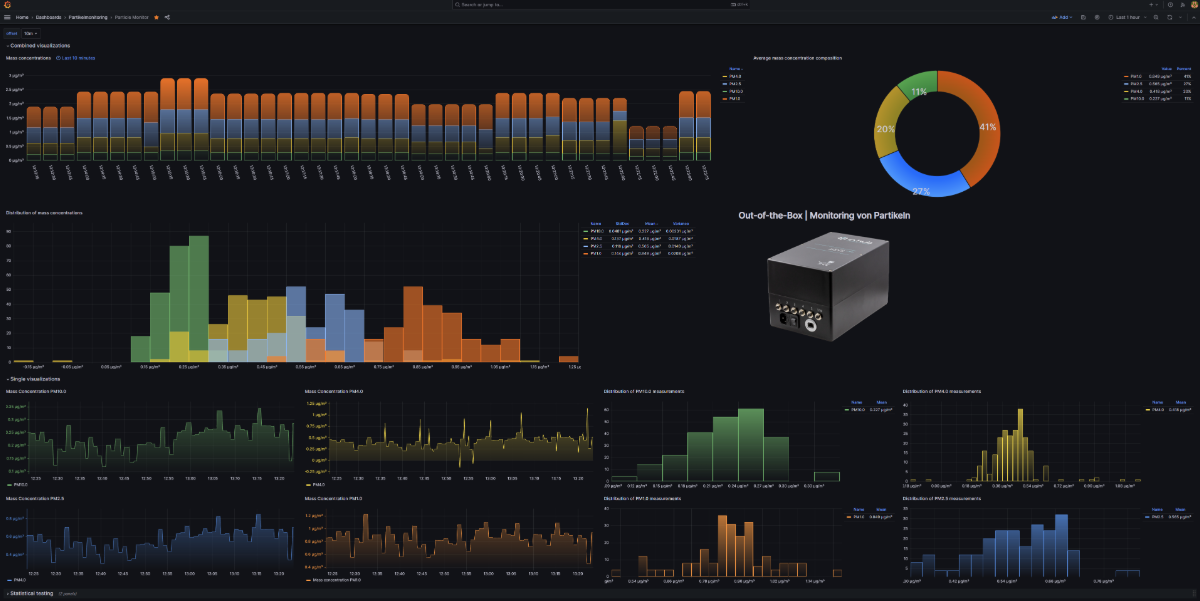
Real-time particle counts and, if desired, the current cleanroom class at a glance. Available 24/7 with sampling accuracy down to the second. The dashboards are accessible locally on your own network from any browser-enabled device. The dashboards are accessible locally on your own network from any browser-enabled device. Any number of different dashboards and visualizations can be created on a single device.
FAQ
Frequently Asked Questions
pSYS detects particles larger than 10 micrometers but displays them as no larger than 10 micrometers; please contact us for alternatives.
Yes, pSYS can monitor cleanroom classes and display the current class upon request.
Yes, the sensors are calibrated; certificates are available upon request.
No. No in.hub device has an Ex rating, not even pSYS. pSYS must not be operated in areas with a risk of explosion (gas or dust).
Personal Introduction
Tell us about your use case.
During our first conversation, we’ll clarify your goals, existing data, and a sensible starting point. You’ll receive an honest assessment of whether and how in.hub fits your project.


Newsletter
The in.hub in.sights&tech.radar
Industry news and real-world insights from actual companies, every two to four weeks.